Chireco
An open API delivering up-to-date geographic data of Chile’s regions and communes.
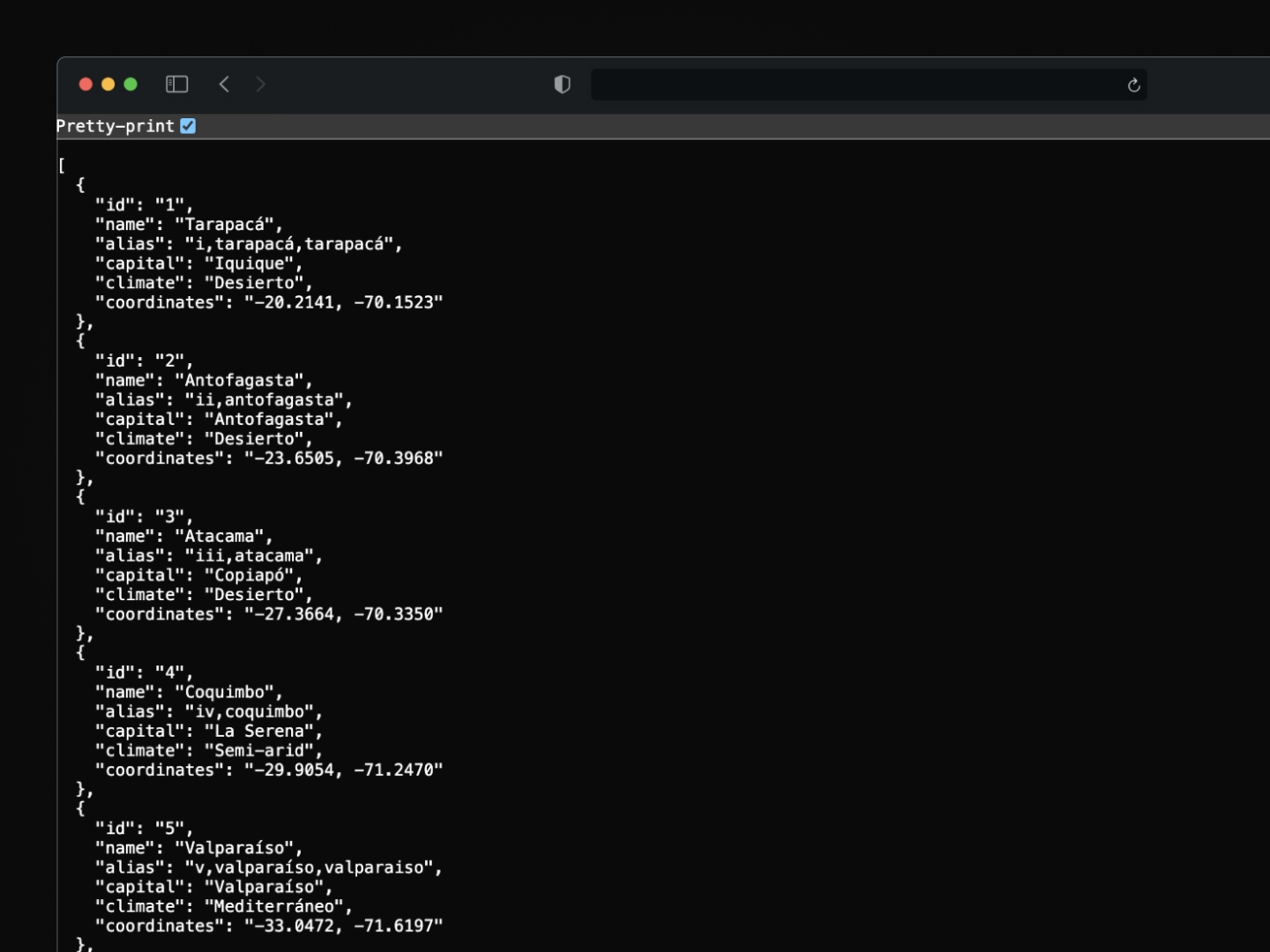
A reliable, developer-friendly API for Chilean geographical data. Because finding consistent official information shouldn't be a heroic feat.
The Motivation: Geography is Hard
I’ll be honest: I’ve always been terrible at geography. But my personal struggle was made worse by a technical one: every time I tried to look up geographical data about Chile, I’d find conflicting information. One site had 345 communes, another had 346, and regional boundaries seemed more like suggestions than facts.
I got tired of the inconsistency. I decided to dive into official national government documents, collect the raw data, and organize it into a single, structured source of truth. Chireco —Chilean Regions and Communes— exists so that no other developer has to waste time cross-referencing PDFs from the 90s just to get a list of regions.
The Project
Chireco is a REST API that provides clean, JSON-formatted data about Chile's territorial organization. It’s built for developers who need accuracy without the headache of manual data scraping.
Key Features
- Verified Data: Every entry is sourced from official government publications and updated to reflect current administrative divisions.
- Granular Levels: Access data sorted by Regions, Provinces, and Communes.
- Developer First: Clean endpoints, predictable JSON structures, and fast response times.
- Open & Accessible: Designed to be the "missing" public utility API for Chilean developers.
Technical Challenge: The Data Hunt
The real work wasn't the code itself, but the data curation.
- Standardization: Converting disparate official documents into a unified schema.
- Accuracy: Ensuring that ISO codes, regional capitals, and commune counts are 100% accurate according to the latest administrative changes.
- Maintenance: Keeping a pulse on legislative changes that might affect territorial boundaries.
Tech Stack
- Node.js: For a lightweight and fast API execution.
- JSON: Used as the primary data storage to ensure maximum portability and zero database overhead for simple queries.
- Official Sources: Compiled from various Chilean Ministry and SUBDERE public records.